The Resurrected King,
Still Resurrecting
A covenant reading of Elevation Worship's "Resurrecting"
·
Section IA Song in Two Tenses
Elevation Worship's "Resurrecting" has been sung in churches across the world for a decade now, and it is easy to hear why. It opens on the dark side of the tomb. The first verses grieve: the Savior is fallen, the sky itself mourns, His blood is poured out, and the full weight of the curse rests on Him. Nothing in those lines hurries toward the happy ending. The song lets the cross be the cross.
Then the ground moves. The stone is rolled away, love proves stronger than the grave, and death is taunted to its face. The chorus names Him the resurrected King, and then it does something most resurrection songs never attempt. It changes tense. The King who rose is, in the song's own word, resurrecting. Present tense. Ongoing. Personal.
That shift is not a songwriter's flourish. The apostle Paul built his whole teaching on baptism around it.
The resurrection is a finished event in history and a present power in the believer. The song holds both, and so does Scripture.
Section IIWhen Creation Wept
The opening verse pictures the heavens grieving the death of their Maker. It would be easy to call that poetic license, but the Gospels record it as fact. From the sixth hour to the ninth, darkness covered the land (Matthew 27:45). Luke says the sun was darkened (Luke 23:45). When Jesus gave up His spirit, the earth quaked, the rocks split, and the veil of the temple tore from top to bottom (Matthew 27:51). Creation did not watch the cross in silence.
The song's attention to the blood is just as grounded. At His last Passover table Jesus took the cup and named exactly what His death would do:
That is covenant language. Centuries earlier, Jeremiah had promised a new covenant in which God would write His instruction on the heart rather than on stone (Jeremiah 31:31-33). What was once carved on tablets at Sinai, the Ten Words, what most Bibles call the Ten Commandments, the spoken vows of the King to His people, would be written inside the people themselves. A covenant is sealed in blood, and on that table Jesus announced whose blood would seal this one.
The curse the song describes resting on Him is Paul's teaching as well: "Christ hath redeemed us from the curse of the law, being made a curse for us" (Galatians 3:13). He did not carry a symbol of our guilt. He carried the guilt.
Section IIIThree Days and Three Nights
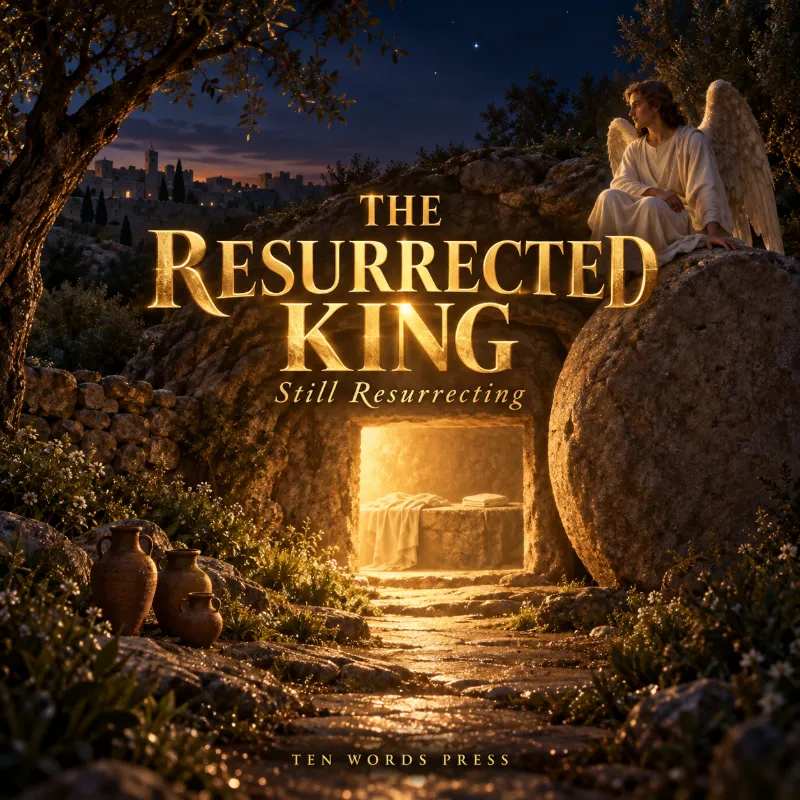
The stone was not rolled away to let Jesus out. Matthew tells us an angel rolled it back and sat on it (Matthew 28:2). The tomb was opened so the witnesses could look in and see that it was already empty.
How long was He there? Many of us were taught to count from a Friday afternoon to a Sunday sunrise, and we learned it from people who loved Jesus and taught in good faith. But Jesus gave one sign of His own, and He gave it with a number attached:
The text fits that sign without strain. John tells us the Sabbath following the crucifixion was "an high day" (John 19:31), a feast Sabbath, not the weekly one. Mark says the women bought spices after the Sabbath was past (Mark 16:1). Luke says they prepared the spices and then rested on the Sabbath according to the commandment (Luke 23:56). Spices bought after one Sabbath and prepared before another means two Sabbaths with a working day between them. The cross stood on the fourth day of the week, Wednesday; three full days and three full nights followed; and when the women came to the tomb on the first day of the week "when it was yet dark" (John 20:1), He was already risen. The sign was kept to the letter.
This is why Ten Words Press speaks of Resurrection Day. The empty tomb deserves a name that points at the empty tomb.
Section IVO Death, Where Is Thy Sting?
The song's taunt at death is borrowed, and gladly so, from the great resurrection chapter of the New Testament:
Paul calls the risen Jesus "the firstfruits of them that slept" (1 Corinthians 15:20). That is not a casual metaphor. In Leviticus 23, on the morrow after the Sabbath following Passover, the priest waved the first sheaf of the harvest before the LORD, and it was accepted on behalf of the whole crop still in the field (Leviticus 23:10-11). The resurrection happened on God's own calendar. The first sheaf has been waved and accepted, which means the rest of the harvest is coming.
Section VAlready and Not Yet
Here the song's present tense earns its keep. Scripture speaks of what Christ has already accomplished and what is still to come, the Already and the Not Yet, and "Resurrecting" lives right in that tension.
Already: the Holy Spirit who raised Jesus from the dead now dwells in His people and gives life to what was dead in them.
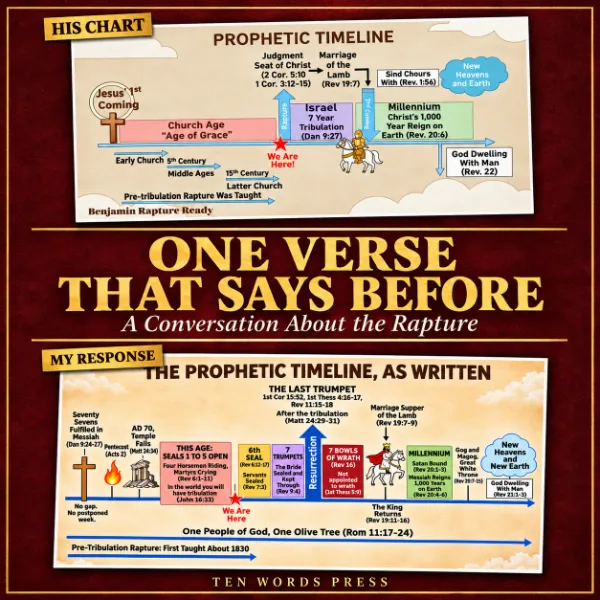
Not Yet: walk through any cemetery and the tombs are still full. Jesus said the hour is coming when all who are in the graves will hear His voice and come forth (John 5:28-29). That hour has not arrived. Paul places it at a sound everyone will hear, "the last trump: for the trumpet shall sound, and the dead shall be raised incorruptible, and we shall be changed" (1 Corinthians 15:52).
So when a congregation sings that the resurrected King is resurrecting them, they are telling the truth twice. He is raising them now, inwardly, by the Holy Spirit, into newness of life. And He will raise them then, bodily, at the last trumpet, when the whole field follows the firstfruits out of the ground.
Section VIThe Lamb on the Throne
The song ends in hallelujah to the Lamb who overcame, and that is exactly where Scripture ends too. John wept in heaven because no one was found worthy to open the scroll, until an elder told him the Lion of the tribe of Judah had prevailed. John turned to see a Lion and saw instead "a Lamb as it had been slain" standing in the midst of the throne (Revelation 5:5-6). The victory was won by the wounds.
The angel told Joseph to call the child Jesus, "for he shall save his people from their sins" (Matthew 1:21). In Hebrew that name is Yeshua, and it means "Yahweh saves." Yahweh is the personal Name of God, written with four Hebrew letters, the Name He gave Moses at the burning bush. The name of the Lamb on the throne is a sentence about what His Father sent Him to do, and the empty tomb is the proof that He did it.
Hallelujah is the word of the wedding. It is what the Bride, the one people God is gathering from Judah, from scattered Israel, and from every nation brought near in Christ, will shout when the Bridegroom finally comes for her. Every time a church sings this song's final hallelujahs, it is rehearsing for that day.
The tomb is empty. The sheaf is accepted. The Lamb is on the throne. And He is not finished resurrecting.
CreditsAbout the Song
Written by: Chris Brown, Mack Brock, Matthews Ntlele, Steven Furtick, and Wade Joye
First released: February 5, 2016, on the live album Here as in Heaven (Essential Worship)
Listen: official live recording · elevationworship.com
All rights to the song and its lyrics belong to their writers and publishers. The lyrics are not reproduced in this article; hear the song in full from the official recording.
Comments
No comments yet. Be the first.