The Order of Daniel
The Magistanes, the Alexandrian Sect, and the
Five-Century Delivery of the Covenant Trust
·
Now when Jesus was born in Bethlehem of Judaea in the days of Herod the king, behold, there came wise men from the east to Jerusalem, saying, Where is he that is born King of the Jews? for we have seen his star in the east, and are come to worship him.
Matthew 2:1–2 · King James VersionNot Impulse. Obligation.
The men who made that journey were not acting on impulse. They were not following a hunch, and they were not amateur astronomers who noticed an unusual light and decided, on a whim, to follow it across a thousand miles of desert and mountain. They were the institutional descendants of the order Daniel had commanded — men who had inherited the prophetic writings, the covenant obligation, the chronological calculations, and the sacred charge to identify, certify, and protect the King when the appointed time arrived.
History has reduced them to three figures on camels. Christmas pageants have assigned them crowns and embroidered robes and a picturesque silhouette against a desert moon. What history has obscured, and what the text demands, is something far more consequential: a Parthian diplomatic delegation. Kingmakers of the eastern superpower. Members of the Council of the Magistanes — the supreme advisory body whose constitutional duties included the absolute choice and election of the Parthian king — fulfilling a covenant obligation that had been accumulating for five hundred years.
They had tracked the timeline across generations. Each generation had opened the scrolls of Daniel, studied the seventy-weeks prophecy, calculated the years remaining, and passed the obligation to the next watch of the order. When the star appeared — the celestial marker that confirmed the prophetic calendar — they did not need to debate whether to go. The maturity date had arrived. The obligation was clear. The trust was due for delivery.
Not three men on camels. A Parthian diplomatic delegation — kingmakers of the world's second superpower — fulfilling the founding obligation of the order Daniel had established from the courts of Babylon.
Rhakotis · Covenant Trust Series · Charles VanceFive Centuries of Calculation
Daniel held two titles in the court of Babylon: Rab-mag, Chief of the Magi, and principal administrator of the empire. When Darius appointed him — a Jew — over the previously hereditary Median priesthood, the repercussions produced the ordeal of the lion's den. He survived. And before he departed the courts of Babylon, he entrusted a messianic vision to a secret sect within the order, to be fulfilled at the appointed chronological hour, to be announced by a star.
That sect carried the charge through every empire that followed. Babylon fell to Persia; the order continued. Persia fell to the Macedonians; the order continued. The Seleucids gave way to the Parthian Arsacid dynasty; the order continued — now embedded in the Magistanes, the constitutional kingmaking council of the world's second superpower, whose institutional scope gave the order exactly the reach and authority it would need when the maturity date arrived.
The Text: "Know therefore and understand, that from the going forth of the commandment to restore and to build Jerusalem unto the Messiah the Prince shall be seven weeks, and threescore and two weeks."
The Obligation: The order held this text not as private scholarship but as a fiduciary instrument — a chronological deadline with specific institutional action required at its fulfillment. Generation by generation, the scrolls were opened, the numbers advanced, and the obligation formally confirmed to the next generation of custodians. This was the trust instrument. The maturity date was in the calculation. The action upon maturity was in the charge.
The Coronation Tokens
They assembled the caravan. The military escort would be large enough to deter interference through Roman-controlled territory and to provide a protective detachment for the beneficiary once identified. The route was planned under the guarantee of the Augustan-Parthian peace. And they gathered the coronation tokens — not sentimental offerings, not gifts of admiring foreign travellers, but the specific instruments of a formal royal installation ceremony.
The Magi transported the wealth of five centuries to Bethlehem and delivered it to the holy family as gifts. The corpus was in the caravan.
The Magi carried coronation tokens — the key, not the vault. The corpus had been accumulating in Alexandria for five centuries, awaiting the certified King's arrival. The tokens identified the beneficiary. The inheritance waited in Egypt.
Bethlehem was the certification ceremony. The tokens declared the King's identity and the three dimensions of His office: sovereign, priest, and sacrifice. The corpus — the trust fund accumulated over five centuries for the express purpose of resourcing the execution of that office — was waiting in Alexandria for the King's arrival at His majority. The Magi presented the credentials. Egypt held the estate.
Sons of Judah: The Prior Order
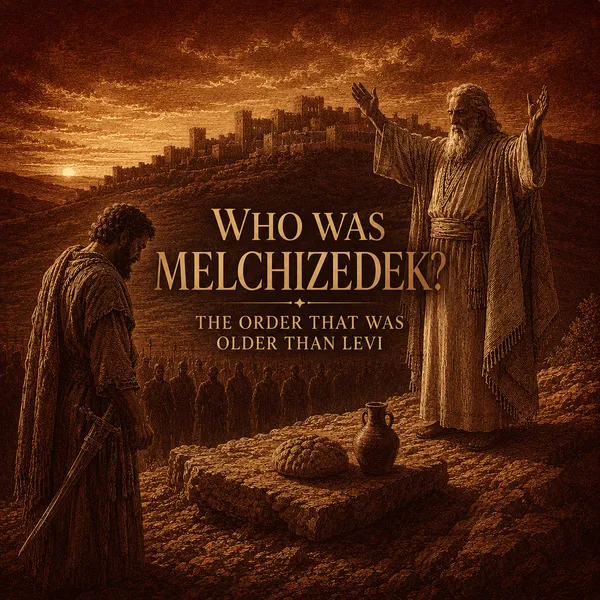
The trust corpus did not wait in Parthia. It waited in Alexandria — held by a sect distinct from both the Jerusalem establishment and the broader Parthian Magistanes, yet covenant-connected to both. These were sons of Judah, not sons of Aaron. They were not maintaining the Levitical system. They were preserving a prior and superior order: the Melchizedekian king-priesthood that predated Sinai, that Abraham himself acknowledged in Genesis 14, and that preceded the patriarch Levi by five full generations.
Melchizedek appears before the Law exists. Before Aaron. Before the Tabernacle. He is king of Salem and priest of El Elyon — and Abraham, the father of the entire covenant lineage including Levi, pays tithes to him. Levi was in the loins of Abraham at that moment. Which means the Levitical order acknowledged its own subordination to the Melchizedekian order at the very moment of its own ancestral inception. The argument of Hebrews 7 is not post-hoc theology. It is the precise reading that the Alexandrian sect had been holding for five centuries.
The Dead Sea Scrolls confirm that this theological architecture was not invented by the early church. The document 11QMelchizedek, composed around the second century BC, identifies Melchizedek as the eschatological high priest who atones for all the sons of light on the final Day of Atonement — the kingly messiah and the priestly messiah united in one figure. The Qumran community anticipated the same change of administration the Alexandrian sect had been guarding. Both understood that what was coming was not a reform of the Aaronic system. It was the installation of the order that the Aaronic system had always been pointing toward.
The Text: "And as I may so say, Levi also, who receiveth tithes, payed tithes in Abraham. For he was yet in the loins of his father, when Melchisedec met him."
The Argument: The Levitical order did not supersede the Melchizedekian order. From its own genetic moment of inception, it stood subordinate to the greater priesthood. The sons of Judah in Alexandria were not rebels against covenant order. They were its senior custodians — holding the prior claim in trust for the one appointed to exercise it publicly.
The Frankincense: When the Magistanes presented frankincense at Bethlehem, they were not acknowledging the Aaronic priesthood. They were declaring its completion and dissolution — the Melchizedekian priest-king who would fulfill every requirement the Aaronic system had ever pointed toward, dissolve the mediating administrative structure entirely, and release every covenant-keeper — priest and people alike — into the universal royal priesthood of the order that had always preceded and superseded Levi. A new order was not being created. The prior and eternal order was being publicly installed.
Dual Obedience: The Theology of the Tutor
The obvious challenge presents itself. If these sons of Judah held the Melchizedekian order as supreme, why would they submit to Levitical authority at all? Why observe Torah, pay temple dues, honor a priesthood they understood to be provisional and terminal?
The answer is theologically precise and practically decisive. They submitted because the Book of the Covenant itself required it. The Book of the Covenant is the eternal standard. The Book of the Law is the tutor appointed by the Book of the Covenant for a specific and defined season. To submit to the tutor during the tutor's appointed time is not a contradiction of the superior order — it is an expression of it. The man who understands covenant most deeply is precisely the man who honors the current administration without being confused about its ultimate authority or its terminal date.
The Jews of Alexandria in this period lived under the Book of the Law. The ethnarch administered it. The synagogue taught it. The Levitical calendar governed the community's rhythms. The Alexandrian sect participated in all of this — not in ignorance, not in capitulation, but in full theological awareness of exactly what they were doing and why. Even the Jewish Magi among them understood: the Melchizedekian priesthood was supreme, but its public installation had not yet occurred. The tutor's commission had not yet expired. The Lamb had not yet arrived. Until He came and executed the trust purpose — fulfilling the Law and inaugurating the New Covenant — the Law remained the appointed governor of the covenant household.
Had collapsed the distinction entirely. Treated the Book of the Law as permanent, self-authorizing, and supreme — forgetting, or suppressing, that it was a tutor with a graduation date. The provisional had become the permanent in their administration of the covenant.
Held the full theological tension with clarity: the Melchizedekian order is supreme; the Aaronic order is the appointed tutor; the tutor's commission has not yet expired; therefore we honor the tutor and walk under the Law — because the covenant that supersedes it has not yet been publicly inaugurated.
Had gone the opposite direction. Disgusted with the corruption of the Jerusalem establishment, they withdrew from the temple system entirely. They anticipated the change correctly but could not hold the tension of patient submission to a tutor they understood to be defiled.
The heir, while a child, is under tutors and governors, no different in practice from a servant — even though he is lord of all. The heir's submission to the tutor is not ignorance of the inheritance. It is covenant-ordered patience, awaiting the fullness of time.
The Alexandrian sect was more theologically sophisticated than any of its contemporaries — not because it had separated from the covenant order, but because it held the covenant order's full tension in both hands simultaneously: the superior order guarded in trust; the provisional order honored in obedience; the appointed hour awaited in patience. This is why their cooperation with the Levitical priests who participated in the sect represents no inconsistency. Those priests understood precisely what they were doing. They were not bringing frankincense to the one who would make their office obsolete — as if they were surrendering a function that would simply cease. They were bringing frankincense to the one who would dissolve the entire Aaronic administrative structure, completing it from within by fulfilling every requirement it had ever pointed toward, and releasing every covenant-keeper — priest and people alike — into the universal priesthood of the Melchizedekian order. The scaffold was not being discarded. It was coming down because the building was finished. The Aaronic priests in the sect were not losing their identity as covenant servants. They were gaining it in its fullest and final form: standing alongside every other member of the covenant community in the royal priesthood that the Aaronic system had been temporarily administering access to on behalf of a people not yet ready for direct approach. That is not contradiction. That is the most complete act of covenant faithfulness the Aaronic order ever produced — bringing the incense of the sanctuary to the one appointed to make the sanctuary's mediating function permanently unnecessary.
The most sophisticated covenant theology was not in Jerusalem and not in the desert. It was in the Delta quarter of Alexandria — held by sons of Judah who honored the tutor without mistaking the tutor for the end.
Rhakotis · Covenant Trust Series · Charles VanceGabriel: Standing Superintendent
Gabriel is not a messenger who appears once and departs. The record establishes him as the standing superintendent of the covenant delivery — managing the distribution of intelligence across multiple parties who do not know each other's full role, using the communication channel native to each recipient.
He speaks to Daniel to deliver the seventy-weeks prophecy that founds the entire operation. He speaks to Zechariah in the temple to announce the forerunner. He speaks to Miriam to announce the beneficiary. He speaks to Joseph in dreams to authorize each movement of the covenant household. He warns the Magi in a dream to depart by a different route, denying Herod's intelligence operation its target. At every critical transfer point — every moment when the operation moves from one phase to the next — Gabriel is present and directing traffic.
The Magistanes were institutional experts in oneiromancy, the interpretation of dreams as a primary instrument of divine communication. This was documented practice, not incidental. When the warning came in a dream, they recognized it without hesitation. Gabriel was operating in their native channel. He had been using that channel with the order since Daniel's day.
The second Book of Enoch preserves a tradition worth noting: that Melchizedek himself was preserved by the archangel Gabriel until the appointed time. Gabriel's connection to the Melchizedekian office runs deeper than the nativity announcements. He is the angel of the covenant delivery in the fullest sense — the standing operative of the trust across the entire five-century delivery horizon, present at its founding, present at its completion, and — there is no warrant to suppose otherwise — present in ongoing management throughout the thirty years of Joseph's administration of the corpus.
Delivers the seventy-weeks prophecy to Daniel. Establishes the chronological framework — the founding instrument of the entire operation. The terminal date and the required action are set.
Speaks to Zechariah in the temple. Announces the forerunner, John. The operation enters its terminal phase. Gabriel identifies himself: "I am Gabriel, that stand in the presence of God."
Speaks to Miriam in Nazareth. Announces the beneficiary. The covenant household is constituted. Gabriel names the child and declares the throne of David.
Speaks to Joseph in a dream. Authorizes the guardian and names the child's purpose. Joseph's role as co-regent steward is established before the birth.
The Magi warned in a dream not to return to Herod. Departure route changed. The order's oneiromantic discipline receives its operational communication. Herod's intelligence operation is denied its target.
Joseph warned in a dream. Flight to Egypt initiated immediately. The beneficiary is moved to the corpus location under Gabriel's direct instruction. The certification of the King and the delivery of the trust corpus are now in the same city.
The Alexandrian Verification
The holy family did not arrive in Alexandria to public recognition. They arrived in secret — absorbed into the Delta quarter Jewish community as any Galilean family in flight from Herod's jurisdiction might be: without announcement, without ceremony, without Roman notice. Invisibility was not a circumstance of weakness. It was a protocol requirement. The Qumran text had said it plainly: "He who nurtures the Holy Shoot to become a Tree of Truth is himself hidden, without esteem, his secret sealed up." The hiddenness was architecturally mandated for the Melchizedekian office until the appointed moment of public installation.
The sect that received the family undertook a verification process proportionate to what was at stake. Five centuries of accumulated covenant obligation. A corpus of extraordinary magnitude. A beneficiary who was an infant. A guardian whose appointment had not been pre-arranged. The process could not be rushed and could not be performed carelessly. They deployed the full deliberative methodology of the order: the prophetic scrolls consulted against the conditions of the trust and the qualifications required of the steward; the astronomical records cross-referenced against the star that had confirmed the timing of the delivery; and prayer, received through the medium of dreams under Gabriel's continuous management of the operation.
The three instruments of the order — the written record, the celestial discipline, and oneiromantic discernment — all converged on the same conclusion. Joseph was confirmed as co-regent steward. Not because he had presented himself as a candidate. Because Gabriel had been building the case for years: a man of Davidic lineage, of the tribe of Judah, whose character under pressure had already been demonstrated in the obedience from Nazareth through Bethlehem through the flight into Egypt. The Alexandrian verification did not discover Joseph. It ratified the appointment Gabriel had already been executing.
Joseph: Co-Regent and Trust Steward
The corpus passed to Joseph's stewardship upon his confirmation. Not the coronation tokens — those had discharged their function at Bethlehem. The corpus itself: the accumulated wealth of five centuries of covenant trusteeship, held in the institutional financial networks of Alexandria, now accessible to a confirmed co-regent steward with a thirty-year mandate and ongoing communication from the superintendent of the operation.
The Jewish community of the Delta quarter provided the essential institutional infrastructure. Wealthy Jews held the office of alabarch — a position of enormous civic trust, controlling substantial capital, governing the eastern Nile trade. The community maintained its own legal institutions, its own council of elders, its own autonomous governance under terms that the Ptolemies had extended and the Romans had confirmed. Octavian reaffirmed Jewish privileges in Alexandria when he annexed Egypt in 30 BC. Joseph was operating within a community that had the structural capacity to manage a trust of extraordinary scale, invisibly, outside the reach of Roman or Herodian administration.
His mandate was not passive guardianship. It was active deployment across a thirty-year operational horizon, directed toward a single purpose: to resource the execution phase of the New Covenant inauguration. The ministry of Yeshua would require infrastructure. A network of relationships that made unimpeded movement through Galilee, Judaea, and the Decapolis possible. The financial capacity to sustain twelve men and an extended community across the seventy-week ministry period. The logistical preparation for a movement that would propagate across the empire within a single generation of its founder's earthly departure. Joseph spent the years in Alexandria — and later in Galilee under the cover of his trade — building what the next phase would require. He was not a bystander in the story. He was the trust administrator, receiving ongoing direction through Gabriel's channel, executing the thirty-year preparation that made the public ministry of Yeshua possible.
The Text: Luke 2:52 records Yeshua at twelve in the temple, then silence until the Jordan. Thirty years of the trust administrator's work — unrecorded in any surviving Gospel text.
The Reason: Operational security. 11QMelchizedek anticipated the hiddenness: the Melchizedekian priest-king hidden until the appointed time, his identity sealed, his purpose concealed until the public installation. The thirty years were not missing information. They were the trust being administered exactly as designed — under Gabriel's superintendence, invisible because invisibility was the covenant requirement of the office until the fullness of time arrived.
The Activation: When Yeshua stepped into the Jordan and John announced the Lamb of God, He was not beginning without foundation. He was activating thirty years of infrastructure that Joseph, under confirmed appointment and continuous dream-guidance, had spent his life building. The trust was not delivering itself from scratch at the Jordan. It was transitioning from the preparation phase to the execution phase, on the schedule Gabriel had been managing for five hundred years.
The Change of Administration
The Alexandrian sect knew what was coming. Not as vague messianic hope — as specific theological expectation grounded in an integrated body of texts they had studied and preserved for generations. Jeremiah 31 declared a New Covenant written on the heart rather than stone tablets. Psalm 110 declared a priest-king forever after the order of Melchizedek who would supersede the Aaronic administration entirely. Isaiah's Servant passages declared the one who would bear iniquity as the final and sufficient sacrifice, making the daily sacrificial system permanently redundant. Daniel's seventy weeks gave the chronological precision for when the transition would occur. These were not separate texts. They were the integrated architecture of a single argument, and the sons of Judah in the Delta quarter could read every dimension of it.
Every sacrifice in the Levitical system said there is something more sufficient coming. Every Day of Atonement said this is not the final word. Every Levitical priest who died and required a replacement said there is one coming who will not need replacing. The Book of the Law was not the destination. It was the map to the destination — and the Alexandrian sect understood this with a precision that exceeded both the Jerusalem establishment, which had forgotten the map was a map, and the Qumran community, which had folded the map and retreated into the desert with it.
The change of administration the sect anticipated was not the replacement of one priesthood with another. It was the dissolution of the Aaronic administrative structure entirely — its completion from within — and the restoration of the covenant community to the universal royal priesthood of the Melchizedekian order. No longer a class of mediators standing between the people and the holy. No longer a distinction between priest and layman governing access to God. Every covenant-keeper standing in the same Melchizedekian reality: direct approach, Law written on the heart, the mediating class permanently released from its commission because the one sufficient Mediator had done the work that made a mediating class unnecessary. This is what Peter articulates: a royal priesthood, a holy nation. This is what the sons of Judah in Alexandria had been holding in trust for five centuries — not just the certification of a King, but the restoration of an entire covenant order in which every member of the community shares the priestly standing that the Aaronic system had been temporarily administering on their behalf.
And then thirty years later, John stands in the Jordan and says Behold the Lamb of God. Gabriel's operation reaches its public phase. The hiddenness ends. The Melchizedekian priest-king steps out of thirty years of covenant-ordered invisibility and into His public ministry — and the first thing He does is submit to a Levitical forerunner's baptism. Even at the inauguration of the New Covenant, He honors the tutor to the final moment of the tutor's commission. That is not inconsistency. That is the most precise covenant theology conceivable — and it is exactly the theology the Alexandrian sect had been living for five centuries in patient, obedient, covenant-ordered waiting.
Behold, the days come, saith the Lord, that I will make a new covenant with the house of Israel, and with the house of Judah: not according to the covenant that I made with their fathers in the day that I took them by the hand to bring them out of the land of Egypt. But this shall be the covenant that I will make with the house of Israel; After those days, saith the Lord, I will put my law in their inward parts, and write it in their hearts; and will be their God, and they shall be my people.
Jeremiah 31:31–33 · King James VersionThe order of Daniel. Five centuries of obligation. Scrolls carried from Babylon through Persia, preserved in the Delta quarter of Alexandria by sons of Judah who held the Melchizedekian king-priesthood in trust for the one who would install it — honoring the tutor without mistaking the tutor for the end, submitting to Levi while guarding what preceded Levi and what would supersede him.
They calculated the seventy weeks while empires rose and fell around them. They assembled the caravan when the star appeared. They presented the tokens at Bethlehem — the key, not the vault. They verified the beneficiary in Alexandria under Gabriel's superintendence, consulting the scrolls, reading the stars, receiving confirmation through the medium of dreams. They confirmed Joseph as co-regent steward and charged him with the thirty-year administration of the corpus.
And when Yeshua stood in the Jordan and the voice came from heaven — This is my beloved Son, in whom I am well pleased — five centuries of covenant custody reached its public declaration. The Lamb was announced. The trust was activated. The change of administration had begun.
The Lord hath sworn, and will not repent: Thou art a priest for ever after the order of Melchizedek.
Psalm 110:4 · King James Version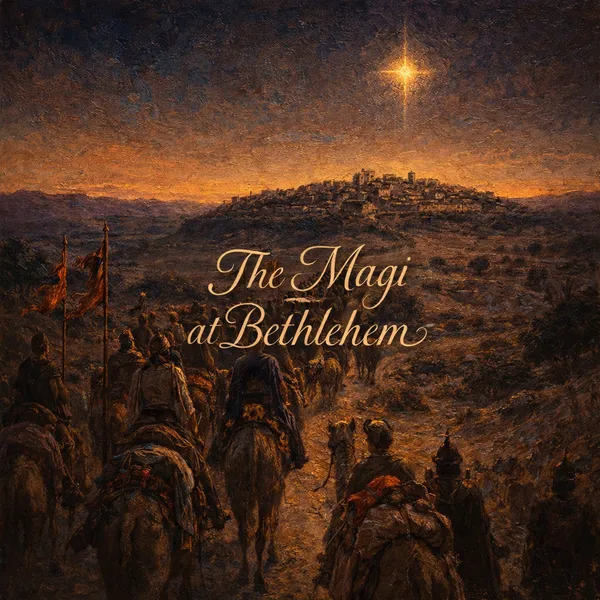

Comments
No comments yet. Be the first.