Keep the Watch
An invitation to stay awake through the night of betrayal — to answer from across time the request the Bridegroom made in the garden.
·
He was looking at us.
That night in the garden, with His sweat falling like blood onto the olive roots of Gethsemane, Yeshua the Messiah was not only praying for the eleven men sleeping a stone's throw away. He was peering into time. He was looking down the corridor of ages — through the destruction of the Temple, through the scattering, through the long exile, through centuries of darkness and distortion — and He was seeing faces. Our faces. The ones who would believe through their word. The ones who had not yet been born. The ones who would come to know Him not by walking the roads of the Galilee but by the testimony carried forward through the Ruach HaKodosh and the witness of Scripture.
He saw us. And He asked us to stay awake with Him.
The Request That Has Never Been Withdrawn
There is a question that hangs in the air of that garden and has never been answered to satisfaction. "Could you not watch with Me one hour?" He asked it of Peter. He asked it of James and John. They had no answer. They had fallen asleep. The spirit was willing, but the flesh was weak, and the night was dark, and the sorrow was heavy, and their eyes would not stay open.
But the question was never closed. It was not rhetorical. It was not a rebuke meant only for three men in a garden two thousand years ago. It was an invitation — extended in the eternal now of Covenant reality — to anyone who would hear it and respond.
The blood of Yeshua is not a historical event that fades with the centuries. It is fresh. The writer of Hebrews speaks of the blood that speaks better things than the blood of Abel. Abel's blood cried out from the ground to YHWH. How much more does the blood of the Messiah speak — not from the ground, but from the Throne, where it is ever before the Father? The Cross is not behind us in the way that last Tuesday is behind us. It stands at the centre of time. It radiates forward and backward. Every generation lives in its shadow and its light simultaneously. And on the night before that Cross, the Man who would hang upon it looked through the veil of time and prayed for us by name.
This is the invitation we are extending to you. Not to observe a ritual. Not to check a box on a liturgical calendar. But to answer the Bridegroom. To sit down in the evening hours, to open the Scriptures, to quiet the noise, and to say to Him across the centuries: "We are here. We are awake. We are watching with You."
He Was Alone That Night
Consider what it means that He was alone. The Son of Elohim, who had walked with these men for years, who had fed thousands with a few loaves, who had raised the dead and stilled the sea — He turned to His closest friends and asked for one thing. Not power. Not a miracle. Not a theological argument. He asked for their Presence. Stay here. Watch with Me. Be awake while I go through this.
And they could not do it.
Peter, who had sworn he would die with Him, was asleep. James, who would later be the first apostle martyred, was asleep. John, who had leaned on His chest at supper and called himself the one Yeshua loved, was asleep. Every single one of them failed the simplest test of friendship. Not because they were faithless. Not because they did not love Him. But because the flesh is weak, and the hour was late, and they did not yet understand what was happening.
We have no such excuse. We know what happened. We have the full testimony. We know that before the sun rose He would be arrested, beaten, mocked, spat upon, dragged through six proceedings, scourged until the flesh hung from His back, and nailed to a Roman execution stake between two criminals. We know that He bore it willingly. We know that He bore it for us. And we know that on the night before all of it began, He asked for company — and received none.
The question is whether we will answer now what they could not answer then.
The Watches of the Night of Betrayal
The night between sunset and sunrise in the age of the Messiah was divided into four watches — four shifts of the darkness, each roughly three hours long. On the night Yeshua was betrayed, each watch carried a distinct weight. Together they form the arc of a single night that changed the Covenant forever.
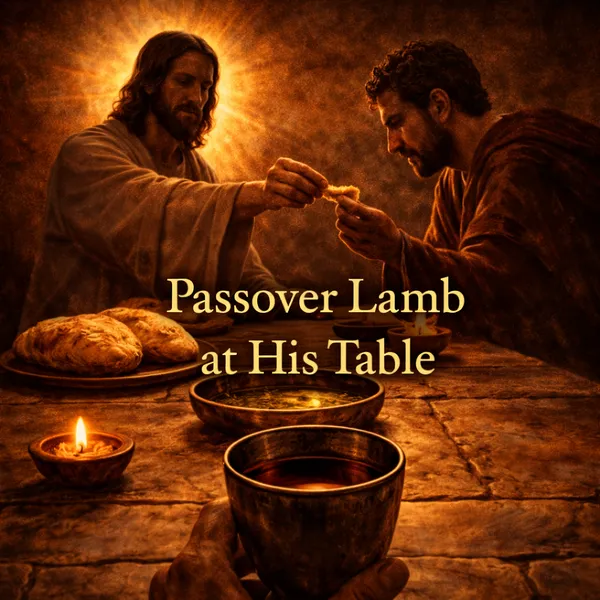
The upper room. Yeshua kneels and washes His disciples' feet — the King becoming the servant (John 13:1–17). He looks at Judas and says, "What you are going to do, do quickly." Judas takes the morsel and walks out into the night. The door closes behind him (John 13:21–30). Yeshua breaks bread, lifts the cup, and tells them to remember Him (Matt. 26:26–29). He opens His heart: "Let not your heart be troubled. In My Father's house are many dwelling places" (John 14:1–2). The teaching pours out — unhurried, intimate, final.
"I am the true vine, and My Father is the vinedresser" (John 15:1). He promises the Ruach HaKodosh, the Comforter, who will lead them into all truth (John 16:7–13). Then He lifts His eyes to Heaven and prays the prayer of John 17 — the high priestly prayer. He prays for the eleven. He prays for their unity. And then He says the words that reach across the ages: "Neither pray I for these alone, but for them also which shall believe on Me through their word" (John 17:20). He is praying for us. They sing a hymn and walk to the Mount of Olives (Matt. 26:30). In Gethsemane He falls on His face: "O My Father, if it be possible, let this cup pass from Me: nevertheless not as I will, but as Thou wilt" (Matt. 26:39). He returns. They are sleeping. "Could you not watch with Me one hour?" (Matt. 26:40). He prays again. They sleep again. His sweat becomes as great drops of blood. An angel comes to strengthen Him (Luke 22:43–44).
Torches appear in the darkness. Judas arrives with swords and clubs and a kiss (Matt. 26:47–50). Yeshua steps forward: "Whom seek ye?" They answer: "Yeshua of Nazareth." He says, "I AM" — and the armed men fall backward to the ground (John 18:4–6). Peter swings a sword and cuts off the ear of the high priest's servant. Yeshua heals it — His last act of healing before the Cross (Luke 22:51). He submits to arrest. The disciples scatter like sheep (Matt. 26:56). He is dragged before Annas, then to Caiaphas. They spit in His face. They blindfold Him and strike Him. Meanwhile, in the courtyard, Peter warms himself by a charcoal fire. A servant girl asks, "Were you not with Him?" And Peter denies. Three times the denial comes. Then the rooster crows, and Yeshua turns and looks straight at Peter (Luke 22:61). That look. The eyes of the Lamb, already bruised, already bleeding, meeting the eyes of the man who said he would die with Him — and finding a stranger.
Dawn breaks. The Sanhedrin assembles for a formal condemnation (Matt. 27:1). They bind Him and deliver Him to Pontius Pilate (Matt. 27:2). Pilate questions Him: "Art Thou the King of the Jews?" Yeshua answers: "Thou sayest it" (Mark 15:2). Pilate sends Him to Herod. Herod mocks Him and sends Him back (Luke 23:6–11). Pilate brings Him before the crowd. About the sixth hour Roman reckoning — the twelfth Hebrew night hour, the final hour before sunrise — he presents the beaten, bloodied figure of the Messiah and says: "Behold your King" (John 19:14). The crowd cries, "Crucify Him." The morning watch ends. The day of Passover begins. And at the third hour of the day, they nail Him to the wood (Mark 15:25). The Lamb is slain.
The Eternal Now
Here is the mystery that the Western mind struggles with but the Hebraic mind understands instinctively: the sacrifice of Yeshua is not merely a past event. It is an eternal reality. The Lamb was slain from the foundation of the world (Revelation 13:8). His blood does not dry. His intercession does not cease. He stands even now as a Lamb that has been slain, bearing in His glorified body the wounds that purchased our redemption. When we remember His death, we are not looking backward through a telescope at a distant event. We are entering into a reality that is as present and as immediate as the breath in our lungs.
And if the Cross exists in the eternal now — if the blood is fresh, if the wounds are open, if the Lamb stands before the Throne bearing the marks of that single terrible day — then the night before is also present. The garden is present. The prayer is present. The request is present. "Watch with Me." He is not asking a historical question. He is asking it now. He is looking through the timeline, past the sleeping disciples, past the centuries of silence, past the traditions that forgot Him and the theologies that misnamed Him — and He is finding us. The ones who would believe through their word. The ones He prayed for before the soldiers ever arrived.
When we stay awake on this night, we are not merely commemorating. We are answering. We are stepping into the garden across time and saying, "We are here. We heard You. We will not sleep."
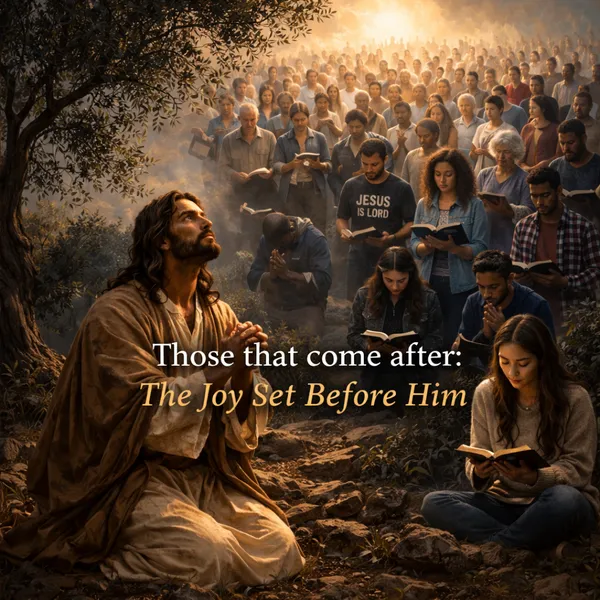
There is comfort in that — not for us, but for Him. The Bridegroom, who endured the Cross for the joy that was set before Him, looked into the future and saw a Bride who would not turn away. He saw the ones who would stay. He saw the late-night readers and the small fellowships gathered around kitchen tables with open Bibles and strong coffee. He saw the parents keeping watch while children dozed on the carpet. He saw the solitary believer sitting alone in a quiet room at two in the morning, reading John 17 by lamplight, weeping at the words "that they may be one." He saw all of it. And it sustained Him.
We are the joy that was set before Him. Let us act like it.
How to Keep the Watch
The structure is simple and requires nothing but willingness, Scripture, and a few hours of the night.
Begin at sunset. Gather whoever is willing — your household, your fellowship, even if it is only you alone with the text. Open to John 13 and begin reading. Let the narrative carry you. Do not rush. Read aloud. Let the words settle. When you reach the end of a chapter, stop and talk. Pray. Sit in the silence if the silence comes. Then read the next chapter.
John 13 through 19 covers the entire arc of the night and the following day. Seven chapters. Four watches. If you read one or two chapters per watch, with pauses for prayer and reflection between them, the text itself will pace the night for you. By the time you reach John 19 in the fourth watch, the sky outside may be lightening. You will have walked through the entire night with Him — from the basin of water and the towel, through the vine and the prayer, through the garden and the kiss, through the trials and the scourging, to the hill where they raised the stake.
You do not need a programme. You do not need a worship leader. You do not need anything that stands between you and the text. Let the Gospel of John be your guide. Let the Ruach HaKodosh be your companion. And let the Bridegroom know that someone, somewhere, in this generation — one of the ones He prayed for — heard His request and stayed awake.
Give Him the hour. Give Him the night. He gave you everything.
Comments
No comments yet. Be the first.