When Yeshua sat down on that Galilean hillside and opened His mouth to teach, He did not introduce a new religion. He did not replace the covenant. He did not hand down a set of improved ethics for a more enlightened age. What He did was far more radical, far more covenantally devastating to the religious establishment, and far more beautiful to the Bride who has ears to hear: He magnified the Ten Words.
This is the key that unlocks the Sermon on the Mount. Without it the entire discourse collapses into moralism — impossible standards that crush the hearer or get softened into sentimental advice. The Sermon is the Bridegroom standing before His Bride and saying: These vows I spoke at Sinai — let Me show you what they look like when they are lifted from stone and inscribed on the living heart by the Ruach HaKodosh.
In Matthew 5:17, Yeshua makes the statement that has been twisted by nearly every tradition that followed. Christendom read "fulfill" as "complete and set aside," as though a fulfilled contract is a discarded one. But a bridegroom who fulfills his wedding vows has not ended his marriage — he has demonstrated what faithful love looks like in action. Yeshua fulfills the Ten Words by living them, magnifying them, and revealing their depth to a people who had buried them under rabbinic tradition and Pharisaic fence-building.
And then He makes a statement so absolute it should have ended the antinomian argument before it ever started: "Until heaven and earth pass away, not the smallest letter or stroke shall pass from the Law until all is accomplished" (Matthew 5:18). Heaven and earth are still here. The Ten Words stand.
What follows in the body of the Sermon is Yeshua working through the Ten Words one by one — not replacing them, not softening them, but driving them past the external boundary of behavior and into the territory of the heart, which is exactly where the Royal Covenant was always meant to operate.
The Sixth Word MagnifiedMurder Begins in the Heart
"You have heard that it was said, 'You shall not murder.' But I say to you that everyone who is angry with his brother shall be guilty" (Matthew 5:21–22). This is the Sixth Word — but now the Bridegroom reveals its covenantal depth. Murder did not begin with Cain's hand on the rock. It began in his heart when his countenance fell. The Ten Words were never merely behavioral minimums. They were marriage vows, and marriage vows govern the heart, not just the hands. When the Ruach HaKodosh writes "You shall not murder" on the heart of the Bride, the Bride does not merely refrain from killing — the Bride puts away the anger and contempt that are murder's root.
The Seventh Word MagnifiedAdultery Begins with the Eye
"You have heard that it was said, 'You shall not commit adultery.' But I say to you that everyone who looks at a woman with lust for her has already committed adultery with her in his heart" (Matthew 5:27–28). This is the Seventh Word magnified. Again, Yeshua does not change the vow. He reveals that the vow was always about the heart. Adultery was never merely a physical act — it was covenant betrayal, and the betrayal begins with the wandering eye and the divided loyalty. The Bride who has the Seventh Word written on her heart does not merely avoid the act; she guards the covenant of her eyes, because her heart belongs to the Bridegroom alone.
This pattern continues through oaths (the Third Word against bearing the Name in vain — Matthew 5:33–37), through retaliation and love of enemies (the summation of all Ten Words in the command to reflect the Father's character — Matthew 5:38–48), and through the devastating exposure of religious performance in chapter six, where prayer, fasting, and generosity are stripped of their public theater and returned to what they always were: acts of covenant intimacy between the Bride and her King.
The Sermon on the Mount is not a new law. It is the eternal covenant — the Ten Words spoken by the Bridegroom's own voice at Sinai — now revealed in their full, heart-penetrating glory by the same Bridegroom standing in flesh before His people.
The Critical Distinction"The Law or the Prophets" — Book of the Covenant or Book of the Law?
But we must press deeper into Matthew 5:17 and ask the question most commentaries skip entirely: when Yeshua says "the Law or the Prophets," what does He mean? Is this the Book of the Covenant or the Book of the Law? The distinction matters — it is not academic hairsplitting but the difference between eternal vows and a temporary tutor.
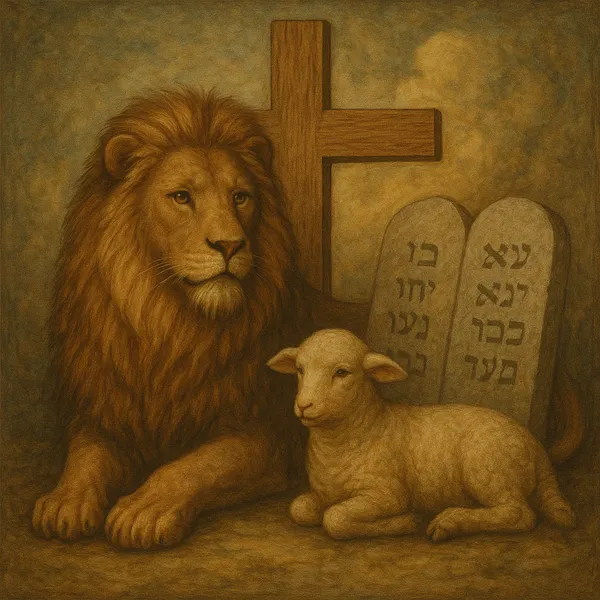
The Book of the Covenant is the direct speech of YHWH received by the Bride at Sinai — Exodus 19 through 24 — crowned by the Ten Words, which alone were written by the Finger of Elohim (Exodus 31:18; Deuteronomy 9:10). These are the marriage vows. They preceded the golden calf. They preceded the breach. They are eternal because they flow from the character of the Bridegroom Himself — the seventh day remains the Sabbath, murder remains murder, adultery remains adultery — and no scribe's hand ever mediated their transmission from heaven to stone.
The Book of the Law was added after the breach, imposed as a tutor "because of transgressions, until the Seed should come" (Galatians 3:19). It was never eternal. It was disciplinary scaffolding for a stiff-necked people who had proven, before the blood of the covenant was dry on the ground, that they could not keep the vows without the Ruach HaKodosh writing them on the heart.
When Yeshua says He did not come to abolish "the Law or the Prophets," He is speaking of the whole covenantal witness — the testimony of Moses and the prophets who followed. But when He magnifies specific commandments in the verses that follow, every single one He reaches for is a Word from the Book of the Covenant: murder, adultery, oaths, the character of the Father. He does not magnify the sacrificial code. He does not magnify the dietary regulations or the Levitical purity system. He reaches for the Ten Words — the eternal vows — and shows what they look like when the Ruach HaKodosh does the inscribing.
This is not an accident. It is covenantal precision. The Prophets themselves confirm it. When Jeremiah speaks of the New Covenant (Jeremiah 31:31–34), YHWH does not say "I will write the Book of the Law on their hearts." He says "I will put My Torah within them" — and in context, what YHWH calls "My Torah" is what He Himself wrote: the Ten Words, His own direct speech, His own marriage vows. The Book of the Law testifies to the covenant; the Book of the Covenant governs the Bride. Under the New Covenant, the testimony continues to instruct, but the vows — eternal, incorruptible, written now on flesh rather than stone — govern.
When the Sermon on the Mount is read through this covenant lens, it ceases to be an impossible moral code and becomes what it always was: the Bridegroom preparing His Bride. He is not raising the bar to crush her. He is showing her what life looks like when the vows are no longer chiseled on stone tablets kept in an ark but alive in the chest of a woman who loves her King. The righteousness that "exceeds that of the scribes and Pharisees" (Matthew 5:20) is not a higher quantity of rule-keeping. It is a different quality of covenant life altogether — the quality that comes when the Ruach HaKodosh does the work that stone could never do.
The scribes counted commands. The Pharisees built fences. But the Bride keeps covenant, because the vows are written on her heart, and she knows the voice of the One who spoke them. That is the Sermon on the Mount. That is the Royal Covenant in action. And the Ten Words — incorruptible, eternal, lifted from Sinai and inscribed by the Spirit — remain the foundation on which the whole house stands.

Comments
No comments yet. Be the first.