Let Her Lead
What the Bible Really Says About Women in Ministry
·
Most arguments about women in ministry begin and end at a single verse in 1 Timothy. Let Her Lead does something different. It saves that verse for the very end and spends most of its pages reading the rest of the Bible first — because that one sentence can only be understood in the light of the whole story. What follows is a short walk through the road the study travels, from the first chapter of Genesis to the last pages of the New Testament.
Part OneIt Began in a Garden
The study opens in Eden. When the Bible first introduces the man and the woman, it does not place one over the other. Both are made in the image of God, both are blessed, and both are given the same work to do.
The garden, the book shows, was more than a beautiful place. It was the first holy place — a temple. The man was put there “to tend it and keep it,” the very words the Bible later uses for the work of the priests in the tabernacle. So from the start, the man and the woman served together as priests in God’s presence, side by side, as equals. The first three weeks of the study draw this out: a shared priesthood, before the fall, before any of the rules we have come to take for granted.
Part TwoThe Long Detour
Then came the fall, and the partnership broke. “He shall rule over you,” the study explains, was not a command to obey; it was part of the curse, spoken in the same breath as thorns and pain and death — a wound to be healed, not a design to defend.
At Mount Sinai God offered the priesthood again, this time to the whole nation: “a kingdom of priests,” men and women alike. But Israel made the golden calf, and afterward God set up a smaller, temporary priesthood — only the men of one tribe, serving behind a curtain. The Bible calls it a guardian, a stand-in until Christ came.
Everything that made the old priesthood narrow — only one tribe, only men, priests who kept dying, a curtain that kept people out — showed that it was temporary, not the way things were always meant to be.
And yet, the study shows, God never went silent about women. All through those centuries He raised up Miriam, and Deborah — “a mother in Israel” who led the whole nation — and Huldah the prophet, whose word settled matters for the king. The priesthood was narrowed to men; but the gift of prophecy, the work closest to preaching, was never closed to women.
Part ThreeWhat Jesus Restored
The turning point is the resurrection. Jesus did not bring back the old priesthood of Aaron. He rose as a High Priest of an older order — the same kind the man and woman had in the garden — and the moment He died, the curtain in the temple tore from top to bottom. The way back to God stood open again.
The study shows that the resurrection made four things new at once: a new law, written on the heart; a new temple, God’s presence now living in His people; a new sacrifice, offered once and finished; and a new priesthood, with the whole church serving as priests.
Most churches gladly accept three of these — they do not rebuild the temple, offer sacrifices, or return to the old law. But on the priesthood, many have kept one piece of the old system: a separate, men-only clergy. If we have let the resurrection finish its work in the other three, the honest thing is to let it finish here too.
Then the apostles say it plainly. At Pentecost the Holy Spirit came on the women as much as the men. The whole church is called “a royal priesthood,” with no clause anywhere that says “men only.” And Paul reaches all the way back to creation:
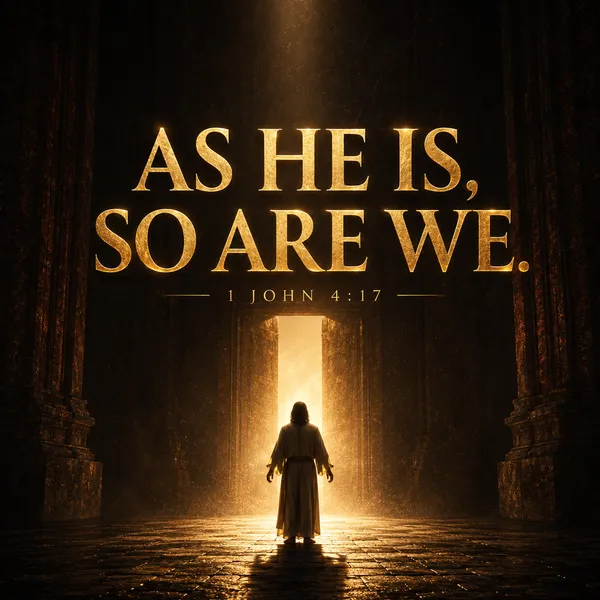
Those last words — “male and female” — come straight from Genesis 1:27. What was equal in the garden is made equal again in Jesus.
Part FourThe Witnesses, and the Two Hard Verses
In its final weeks the study brings the case into daylight. Paul commends Phoebe, a deacon trusted to carry the letter of Romans and explain it. He greets Junia, a woman he calls “outstanding among the apostles.” And in the book of Acts, it is Priscilla who helps teach the gifted preacher Apollos the way of God more fully. Real women, in real ministry, with the apostles’ blessing on them.
Only then does the book turn to the two hard verses — and reads them carefully, in their own setting. The passage in 1 Timothy begins not with a ban but with “Let a woman learn.” The letter was written to stop false teaching in Ephesus. The rare word Paul uses for “authority” means something closer to “dominate” or “seize control.” And the same Paul who wrote those words praised the very women some say must stay silent. Read in their context, the verses correct a local problem in one church; they do not overturn the rest of the Bible. The simple rule the study follows is the oldest one there is: let the clear parts explain the unclear parts.
In ShortThe Road the Book Travels
That is the whole road in brief: a shared priesthood in the garden, broken at the fall, narrowed for a season, and reopened in Jesus for all of God’s people — His daughters as well as His sons. The door that was shut is open again, and it was never God who shut it.
The full study walks that road slowly, one week at a time, with the Scriptures laid open, illustrations for each step, and questions for personal study or a group. If this short version has raised questions, the long version was written to answer them. Let the daughters speak. Let her serve. Let her teach. Let her lead.

Twelve weeks, from Genesis to Revelation, with the hard verses answered in full. Read it free, or take the Kindle edition with you.

Comments
No comments yet. Be the first.